
The 7 Principles, Active-Passive Learning, Bloom’s Taxonomy: Cognitive, Affective and Psychomotor. So far this has been an informative and busy course. As we move through Part two, I find the knowledge I’ve gained to be enlightening. The best practice teaching principles and the various learning theories will inform my teaching in an exciting new way. I now feel better informed. The issues of teacher-student and student-student collaboration present a fresh perspective about the dynamics involved in learner interactions whether f2f or online. As an instructor it’s important for me to remember, it’s always about reaching your students.
To actively engage students in the learning process you must build better learning communities. This can be accomplished through balancing the application of the various theories by adding different tools to reach specific learning styles. Whether it’s a well moderated discussion board posing stimulating questions with immediate feedback or breaking larger concepts into smaller pieces, it’s about engaging students in the learning process. This is my light bulb moment. I get it!
MCOM 660: Non Broadcast TV Operations aka Non-Traditional Broadcast Production
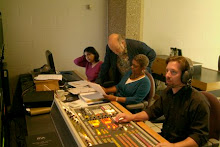
In my f2f media communications class I mainly used the “sage on the stage” approach. Even so, it was interesting to find without realizing it, I was using the constructivist model. I encouraged students to build on their prior knowledge and experience level to analyze specific approaches to production problems. My motto was, “ten producers, ten ideas.” But now I understand, the “ten ideas,” came from multiple styles of learning and information processing. This realization will forever alter my teaching style.
As the instructor, I now understand the importance of recognizing the impact of different learning styles on knowledge retention and processing. Whether it’s f2f or online, having a better grasp of the Visual/verbal, Visual/Non-verbal, Tactile/Kinesthetic and Auditory/Verbal styles informs the way one designs course content and student assignments. I now plan to include more visual and audio files along with text and incorporate more student lead discussions. In future course designs I will give up the “stage” more and be the “guide on the side” empowering students to help direct their own learning. I will clearly state course expectations, give plenty of prompt feedback, encourage team work and most of all; respect diverse learning styles.
In addition I have learned as an instructor you must prepare students to use their new power by helping them develop critical analysis and time management skills. These are crucial to their success, especially in an online environment. Understanding and utilizing Bloom’s three learning types will aid in this process. (Click the link below to view a Bloom’s Taxonomy animation)
http://www.apsnet.org/education/InstructorCommunication/TeachingArticles/Curtis/Images/Bloomstaxonomy2.html
Finally, what I’m most looking forward to in regards to my personal development, is the eportfolio challenge. I have always wanted to develop an electronic portfolio. Though the livetext software seems a bit basic I still want to incorporate some techie type ideas, so I purchased the extra video streaming capability. Besides our online knowledge, the eportfolio will be an excellent artifact to take away from the ONTL course.


No comments:
Post a Comment