Wednesday, December 3, 2008

I Want to "Twitch!"

I want to move at “Twitch” speed. Well, we all can dream. But this new term for the fast paced multi-tasking abilities of the under 30 crowd is a real challenge for today’s educators and employers. I learned so much about embracing and designing online learning from this first ONTL class that I could go on for several pages. But I feel the core principle of the past 15 weeks is basically about becoming a more "student centered" instructor. This makes me wonder about “Twitching.” A new 21st century phenomenon.


As the mother of two “Twitchers ,” and an instructor to this generation, I must find new ways to reach and teach these tech savvy learners. Marc Prensky’s article, “Twitch Speed: Keeping up with Young Workers,” is a crucial piece of reading to assist in reaching this goal. Presnsky wrote about how this “Twitch” generation processes information in a parallel instead of a linear fashion.

http://www.marcprensky.com/writing/Prensky%20-%20Twitch%20Speed.html

As a teacher and mother I have found this to be absolutely true. When dealing with this 30 and under age group it seems what I find distracting, they find stimulating. When I want to read, they want to search. As an online course designer the question becomes, how do you incorporate their active learning style into online and/or f2f hybrid instruction?

From my exploration of the 2.0 web technologies, I believe these various online components can reach this group extremely well. Whether the course is totally online or a hybrid, utilizing online tools for “twitch” generation learning is a viable approach. They’re a generation who loves random access and “clicking around” at the speed of light, as they text friends and listen to the latest downloads from their iTunes library. Whew! Gives me a headache. So, I guess my “twitch” dream may be unrealistic.


This brings us to the debate over which tools are best to reach these students no matter what their actual learning styles may be. Whether they’re visual, verbal, auditory, tactile/kinesthetic, active/reflective, etc. etc. etc. learners, all “Twitchers” appear to need motion and engagement, but just how much? When my daughter, much like the worker cited in Presky’s article, wants to know how to solve a computer problem, she shoots off to the internet (sometimes before accessing the help button) to post and search her problem. My generation says, where’s the manual? “Twitchers” respond, “don’t know, but this website said....”


I believe this is a wonderful course design opportunity. For someone like me who loves technology and computers, the challenge becomes which tools should I select? Also, how do I bring my course to life while being true to the content and remaining connected to my students? I’ve learned my f2f classroom teaching style is an “expert” who embraces “constructivism.” I want to share what I know while encouraging my students to share and build on their current knowledge.


As I contemplate these issues, I now consider alternatives to my “Sage on the Stage” training that "Twitchers" would embrace. I would extend the learning with discussion posts and online resources. Upload course Podcasts. Encourage active research with Hyperlinks and embedded videos. Promote student-student interactions through team assignments and online group or student led activities. I would bring experts into class with Wimba chats and mentors through professional Blogging sites. I would send out mobile phone course announcements and ...Hey, are we “Twitching” now!?


To “twitch or not to twitch” is now combined in my mind with “to reach or not to reach.” This is the synthesis. What should you design to make sure the content reaches and remains with your students? How do you make sure any technology used is always done in an exemplary fashion while taking into account the bandwidth needs and even the disabilities of your students?

In this new online world I know I may lose some of the f2f “high touch” I enjoy,” but the “high Tech” components, if thoughtfully designed, can effectively accomplish most learning goals. I want to take this understanding and cement it into a new way of seeing instruction. I’m not totally comfortable yet, and I’m not sure I'll ever be able to “twitch” at an appropriate speed. But I know I can teach and reach, share and learn, and with time, encourage and connect in multiple modalities.


Thursday, October 30, 2008

It's always about reaching your students


The 7 Principles, Active-Passive Learning, Bloom’s Taxonomy: Cognitive, Affective and Psychomotor. So far this has been an informative and busy course. As we move through Part two, I find the knowledge I’ve gained to be enlightening. The best practice teaching principles and the various learning theories will inform my teaching in an exciting new way. I now feel better informed. The issues of teacher-student and student-student collaboration present a fresh perspective about the dynamics involved in learner interactions whether f2f or online. As an instructor it’s important for me to remember, it’s always about reaching your students.

To actively engage students in the learning process you must build better learning communities. This can be accomplished through balancing the application of the various theories by adding different tools to reach specific learning styles. Whether it’s a well moderated discussion board posing stimulating questions with immediate feedback or breaking larger concepts into smaller pieces, it’s about engaging students in the learning process. This is my light bulb moment. I get it!

MCOM 660: Non Broadcast TV Operations aka Non-Traditional Broadcast Production
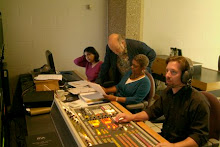
In my f2f media communications class I mainly used the “sage on the stage” approach. Even so, it was interesting to find without realizing it, I was using the constructivist model. I encouraged students to build on their prior knowledge and experience level to analyze specific approaches to production problems. My motto was, “ten producers, ten ideas.” But now I understand, the “ten ideas,” came from multiple styles of learning and information processing. This realization will forever alter my teaching style.


As the instructor, I now understand the importance of recognizing the impact of different learning styles on knowledge retention and processing. Whether it’s f2f or online, having a better grasp of the Visual/verbal, Visual/Non-verbal, Tactile/Kinesthetic and Auditory/Verbal styles informs the way one designs course content and student assignments. I now plan to include more visual and audio files along with text and incorporate more student lead discussions. In future course designs I will give up the “stage” more and be the “guide on the side” empowering students to help direct their own learning. I will clearly state course expectations, give plenty of prompt feedback, encourage team work and most of all; respect diverse learning styles.

In addition I have learned as an instructor you must prepare students to use their new power by helping them develop critical analysis and time management skills. These are crucial to their success, especially in an online environment. Understanding and utilizing Bloom’s three learning types will aid in this process. (Click the link below to view a Bloom’s Taxonomy animation)

http://www.apsnet.org/education/InstructorCommunication/TeachingArticles/Curtis/Images/Bloomstaxonomy2.html

Finally, what I’m most looking forward to in regards to my personal development, is the eportfolio challenge. I have always wanted to develop an electronic portfolio. Though the livetext software seems a bit basic I still want to incorporate some techie type ideas, so I purchased the extra video streaming capability. Besides our online knowledge, the eportfolio will be an excellent artifact to take away from the ONTL course.

Tuesday, October 14, 2008

Part One of ONTL 650, WOW!

Part One of ONTL 650 has been quite a learning experience. Though I work at being technologically savvy, there were a few things I hadn’t considered in my media and teaching designs. My first major eye opener was learning about Constructivism. It made such perfect sense. All students come to you with a past learning history that you as a teacher can pull from. It’s a great way to start your student-teacher interactions. There is nothing better than real-world case studies to get class discussions energized. I discovered through learning about this theory that I had a constructivist classroom. I encourage students to share their past experiences with the class and use it as a base to build on. Now I understand how to effectively use constructivism as an exploration tool for all of my student-teacher interactions.

One of my favorite lessons from part one was about learning and teaching styles. The initial DVC Survey put me on the right track. I didn’t fully comprehend how important it is to have a good working knowledge of these theories. I'm a Kinesthetic/Tactile learner, with reflective qualities who likes to contemplate in the cave before joining the campfire where I act as an Expert and Formal Authority, whew! I now know there cannot be effective teaching without understanding and applying these learning and teaching theories. I realize there’s a theoretical reason why video or audio files assist visual and auditory learners. I get why verbal learners react better to written instructions and flash cards. But I believe, even with the style differences, ALL learning and teaching benefit from the interactivity, immediacy, and variety of the online environment.

The challenge as I see it is how to make the “high tech” environment, “high touch.” I’m a technology lover, but I lean toward the hybrid design option because I really love the student-teacher f2f interaction. Wimba, synchronous Chat and asynchronous discussion boards help with community building in the “high touch” environment, but I have to admit I really miss the eye contact. I think people naturally feed off of each other’s energy. Though I like going off in the web world, researching and exploring on my own. I like regrouping to share the “aha” moments. So to me, online feels a bit lonely at times.

Tuesday, October 7, 2008

Week 6 - What is my teaching style?

"The combination of online learning with traditional classroom instruction could diversify teaching and learning alike, and as a bonus enhance technological literacy of both faculty and students."

I love this statement from the Schmidt and Brown article, "A Model to Integrate Online Teaching and Learning Tools Into the Classroom." It resonates deeply with my teaching style. According to the "Teaching Styles Inventory" which lists 5 major categories, I score high as an Expert and a Facilitator. So what does this mean? How do I integrate my style and the styles of my students?

The word, "Combination," is the key. It seems to describe everything I do. From combination plate to combination teaching, I can't seem to choose only one thing from the menu. Though I enjoy the online environment, (I'm such a tech junkie), why does the thought of not teaching F2F still unnerve me. Maybe it's because I crave student interaction. I want to see the faces behind the chats. The "aha moments" in their eyes. I know Wimba is a viable option. But there's just something about being in the room.

I believe teaching is about combining. About mixing it up. I need the word "hybrid." I want the best of both worlds. Some days I want to chat, other times I want to write my thoughts. Sometimes I need a team, others times I require some quite contemplation. And often I just want hands on...a camera, a paint brush, another human being.

So, how do I accomplish all of this in an online setting? How do I give this to my online students?

This class is truly opening my eyes to the many possibilities and some of the limitations of online learning. There are amazing resources, but the distance can be lonely. I enjoy the 24-7 access, but at times I wish we could just meet for Starbucks. I love the levelling of the playing field since online can remove visual preconceptions. But I miss being in the presence of other human energy. Online is fine, but a hybrid, that's me.

Monday, September 29, 2008

WEEK 5 for a Tactile/Kinesthetic Learner

It is week 5. It's not required that I write a post, but just need to say, WOW! This online learning thing is fun and overwhelming. I thought I knew quite a bit, but I'm learning so much more each day from my fellow classmates and Jan. I really enjoyed learning that I'm a Tactile/Kinesthetic learning. Good ole' DVC learning styles. I'm also a reflective cave dweller. Hmm, anyway. Considering the fact that this blog was not required, but here I am, it's obvious I can't help myself. Can't keep my hands still if the Internet is launched. But even though I enjoy the Internet, I cannot say I like chatting all that much. TOO SLOW! BAD SPELLER! I'm looking forward to Wimba :)

Tuesday, September 9, 2008

Week 2 Begins - Constructivism

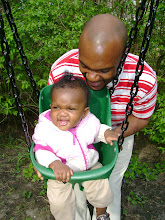
The first week of my ONTL class went by quickly. I was surprised at how much was shared and learned. I enjoyed learning about my fellow classmates through their blogs and hope they too put up more photos since I like peeking into the lives of others :). Oh, I put up a couple of my own to share just for fun. They are the people who most inspire me

Now week two begins. Though I think of myself as digitally savvy, I'm not as well versed on teaching theories. Constructivism was a new word for me, though an old classroom friend. I had started using this teaching method last summer in my MCOM 660 corporate production class. I realized that the constant lecturing and "sage on the stage" approach was not as effective as sending students out to prove or disprove their project ideas through their own experiences, observing world around them and exploring new technology examples. Their discoveries taught me so much.

Now, I want to make sure I reach my student , both F2F and distance ed, in ways that are productive for them. I'm searching for more knowledge about various learning theories and the research of adult learning pioneer, Malcolm Knowles, was very informative. It helped me understand the differences between adult learners and younger students like my 18 year old daughter. One thing Dr. Knowles pointed out was how, "Adult learners have accumulated a foundation of life experiences and knowledge that becomes an increasing resource for learning." Constructivism! I get it! This teaching theory can help all students take charge of their learning, and that's a good thing.I look forward to the information contained in week 2.


Thursday, September 4, 2008

Opening Day at the Digital Convention

By training, I'm a hard core television producer. I love the details, the why questions. The learning just to know. So the invention of the internet was the ultimate fix for information junkies like me. I have been addicted to this amazing "broadcast" medium ever since discovering there were thousands of sites on Victorian history and I could shop in London from my living room sofa. Ahh, pure pleasure! But this new technology that brought the world through my front door, begged for a producers intellectual exploration. So I began to ask myself, how do I best utilize this new technology? How do I incorporate the web into my production work and class room teaching? Besides simply enjoying the gathering of information, how do I master its delivery? The first thing was a title change. I became a multi-media producer.

The discovery that my beloved audio and video could live almost anywhere eventually lead me to the door of online teaching. At first I thought online teaching and learning was just the constant reading of screen text. For a highly visual person like myself, this was off putting. I needed sound and motion, video, audio, pictures, links to museums, interactivity, and on and on and on. Patience, I was told, help was on the way in the form of Web 2.0. Enter social networks, blogging, Utube and streaming video technology. Hey, count me in!

For my MCOM 660 class I have incorporated an asynchronous discussion board, a podcast and an orientation lecturette. In webct I have also used Utube and corporate video links as samples for class analysis. Now, with the training I will receive from my OLT courses, I hope to learn even more about how to better incorporate the 2.0 and other emerging technoloogies into my classroom teaching and course designs.

I love the idea of interaction with and between students and experts from around the world. I want to learn how to better capture these "magic moments" to archive for future use so I won't have to re-invent the wheel. The various design possibilities have my producer senses tingling.
During the upcoming weeks, I look forward to exploring online design ideas and new technology applications with Jan and my fellow classmates.